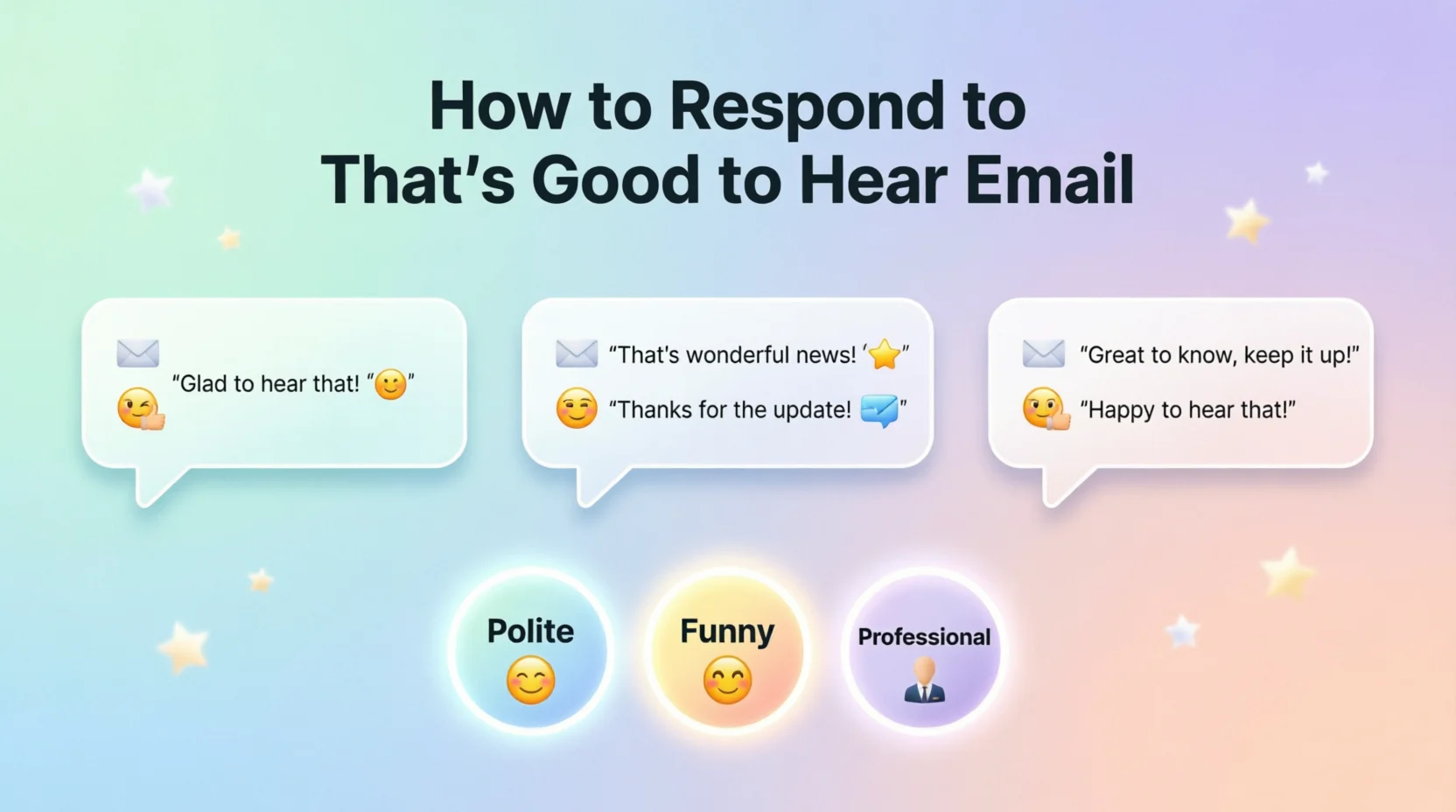
The best way to respond to a “that’s good to hear” email is to keep it short, warm, and forward-moving. Acknowledge the good news and point to the next step if there is one. “Thanks, I’m glad too.”, “Happy to hear it, and thanks for the update
You hit send on an update, and the reply lands in your inbox: “That’s good to hear.” Four words, zero details, and now you’re wondering if the email chain is over or if you’re supposed to say something clever. It happens with managers, clients, coworkers, old friends, and even that one person you’ve been emailing about a group trip for three weeks.
Knowing how to respond to that’s good to hear email keeps your tone polished without sounding stiff. A good reply builds trust, wraps up the thread, or opens the door to the next step. A bad one leaves things hanging or sounds like a robot wrote it. This list has a reply for every mood and every inbox. Bookmark it and never overthink a short email again.
Polite Responses
“Thank you, I appreciate you saying that.”
Example: Use it when a client acknowledges your update.
Meaning: Shows gratitude in a warm, simple way.
“Glad to hear you feel the same.”
Example: Reply to a colleague who agrees with your plan.
Meaning: Confirms you’re on the same page.
“Thanks for your kind response.”
Example: Use it when someone replies graciously to a tough update.
Meaning: Acknowledges their courtesy.
“I’m happy it worked out well.”
Example: Reply after sharing a resolved issue.
Meaning: Expresses shared relief.
“Thank you, that means a lot.”
Example: Use it when a manager praises your progress.
Meaning: Sincere and humble appreciation.
“Good to know we’re aligned.”
Example: Reply to a teammate after a decision.
Meaning: Highlights agreement.
“Thanks again for your support.”
Example: Use it when someone helped you along the way.
Meaning: Credits their help.
“I appreciate you letting me know.”
Example: Reply to a short confirmation.
Meaning: Politely acknowledges the message.
“Happy to have your feedback.”
Example: Use it after sharing a draft.
Meaning: Welcomes their input.
“Thank you for the quick reply.”
Example: Reply to a speedy response.
Meaning: Recognizes their promptness.
“It’s great to have your support on this.”
Example: Use it when a team backs your idea.
Meaning: Shows you value their backing.
“Thanks, I’ll keep you posted.”
Example: Reply when more updates are coming.
Meaning: Sets expectations kindly.
Professional Responses
“Thank you. I’ll proceed with the next steps.”
Example: Use it after getting approval on a project.
Meaning: Signals you’re moving forward.
“Appreciate the confirmation. I’ll follow up shortly.”
Example: Reply to a client who approved a quote.
Meaning: Shows reliability.
“Great, I’ll update the team accordingly.”
Example: Use it after a manager gives the green light.
Meaning: Shows ownership.
“Thanks for the update. Let me know if anything changes.”
Example: Reply to a status email.
Meaning: Leaves the door open.
“Glad we’re on track. Talk soon.”
Example: Use it when a project is going well.
Meaning: Friendly and efficient.
“Understood. I’ll keep you informed.”
Example: Reply to a short acknowledgment.
Meaning: Reinforces communication.
“Good to hear. I’ll circle back next week.”
Example: Use it when planning a follow-up.
Meaning: Sets a clear timeline.
“Thank you for confirming. I’ll finalize everything.”
Example: Reply to a client sign-off.
Meaning: Wraps up the task.
“I appreciate your input and will act on it.”
Example: Use it after receiving feedback.
Meaning: Shows you take it seriously.
“Perfect, I’ll send the details shortly.”
Example: Reply when you owe a follow-up.
Meaning: Promises action.
“Thanks, we’re moving ahead as planned.”
Example: Use it with a team lead.
Meaning: Confirms the plan.
“Wonderful. Please reach out if you need anything.”
Example: Reply to close the thread.
Meaning: Offers continued support.
Warm And Friendly Responses
“Thanks, that made my day.”
Example: Reply to a kind note from a coworker.
Meaning: Shares a genuine good feeling.
“Aww, glad you’re happy with it.”
Example: Use it with a friendly client.
Meaning: Warm and approachable.
“Hearing that makes me smile.”
Example: Reply to a friend sharing good news.
Meaning: Shows real joy.
“Thanks, I was hoping you’d like it.”
Example: Use it after sending a draft.
Meaning: Honest and personable.
“Good vibes all around.”
Example: Reply to a team celebrating a win.
Meaning: Casual and upbeat.
“So happy things are going well for you.”
Example: Use it with an old colleague.
Meaning: Kind and caring.
“Love hearing that.”
Example: Reply to quick positive news.
Meaning: Light and enthusiastic.
“Thanks for brightening my inbox.”
Example: Use it after a pleasant surprise.
Meaning: Playful gratitude.
“That’s the best news I’ve had today.”
Example: Reply to a hopeful update.
Meaning: Genuine delight.
“Thanks, it’s great to hear from you.”
Example: Use it with someone you haven’t emailed in a while.
Meaning: Friendly reconnection.
“Glad we’re both smiling about this.”
Example: Reply to a mutual win.
Meaning: Shared happiness.
“You always know how to cheer me up.”
Example: Use it with a supportive friend.
Meaning: Affectionate gratitude.
Funny Responses
“Good to hear. I’ll tell my inbox it can relax.”
Example: Use it after a stressful email chain.
Meaning: Jokes about relief.
“Great, I’ll go celebrate with a snack.”
Example: Reply to a friend after good news.
Meaning: Playful reward.
“Fantastic, my to-do list just did a happy dance.”
Example: Use it when a task wraps up.
Meaning: Funny relief.
“Excellent, my stress level just dropped by two.”
Example: Reply after a tense project.
Meaning: Humorous honesty.
“Cool, I’ll update my mood to ‘thriving.’”
Example: Use it with a witty coworker.
Meaning: Jokes about status.
“Wonderful, my coffee tastes better already.”
Example: Reply on a Monday morning.
Meaning: Light and relatable.
“Good to hear, I was bracing for chaos.”
Example: Use it after a risky deadline.
Meaning: Playful relief.
“Fantastic, I’ll add it to the win column.”
Example: Reply to a small victory.
Meaning: Cheerful humor.
“Whew, I can finally unclench.”
Example: Use it after waiting on an answer.
Meaning: Funny honesty.
“Great, now I can pretend I planned it.”
Example: Reply when things worked out by luck.
Meaning: Self-deprecating humor.
“Fantastic, my anxiety can take a lunch break.”
Example: Use it with a close coworker.
Meaning: Light, relatable joke.
“Good news. I’ll keep that and delete my worries.”
Example: Reply to a positive update.
Meaning: Playful release.
Chill And Casual Responses
“Cool, thanks for letting me know.”
Example: Reply to a short, friendly update.
Meaning: Easygoing acknowledgment.
“Nice, glad it’s all good.”
Example: Use it with a teammate.
Meaning: Simple and relaxed.
“Sweet, thanks.”
Example: Reply to a quick yes.
Meaning: Short and friendly.
“Awesome, I’ll catch you later.”
Example: Use it to close a chat.
Meaning: Casual sign-off.
“Great, no stress then.”
Example: Reply when the pressure is off.
Meaning: Laid-back relief.
“Perfect, that works for me.”
Example: Use it after agreeing on a plan.
Meaning: Calm approval.
“Good deal, talk soon.”
Example: Reply to wrap up a thread.
Meaning: Friendly closure.
“Love that, thanks for the heads up.”
Example: Use it with a coworker.
Meaning: Casual gratitude.
“Nice one, appreciate it.”
Example: Reply to good news from a friend.
Meaning: Relaxed praise.
“All good on my end too.”
Example: Use it to mirror their status.
Meaning: Shows shared calm.
“Cool beans, thanks.”
Example: Reply to a laid-back colleague.
Meaning: Light and playful.
“Sounds great, catch you soon.”
Example: Use it to close the loop.
Meaning: Easy and warm.
Confident Responses
“I knew it would work out.”
Example: Reply after a plan succeeds.
Meaning: Quiet self-assurance.
“Glad it landed well. I’m just getting started.”
Example: Use it to show ambition.
Meaning: Confident and forward-looking.
“Thanks, we’re right on track.”
Example: Reply to a manager’s approval.
Meaning: Shows control.
“That’s the plan. More wins coming.”
Example: Use it after a milestone.
Meaning: Bold optimism.
“Appreciate it. I’m ready for the next step.”
Example: Reply after positive feedback.
Meaning: Shows readiness.
“Great, I had a good feeling about this.”
Example: Use it after a smooth outcome.
Meaning: Calm confidence.
“Thanks, I’m proud of how it turned out.”
Example: Reply to praise on your work.
Meaning: Owns your effort.
“Good, because I’ve got more coming.”
Example: Use it to tease upcoming news.
Meaning: Confident and playful.
“That’s the standard I aim for.”
Example: Reply to a compliment on quality.
Meaning: Shows high standards.
“Right on schedule, as expected.”
Example: Use it for a project milestone.
Meaning: Efficient and sure.
“I’m glad. Let’s aim even higher.”
Example: Reply to push for bigger goals.
Meaning: Ambitious tone.
“Thanks, I’m confident the next phase will go well too.”
Example: Use it with a client.
Meaning: Builds trust.
Sweet Responses
“That’s so kind of you to say.”
Example: Reply to a thoughtful note from a friend.
Meaning: Soft and grateful.
“Hearing that warms my heart.”
Example: Use it with a loved one.
Meaning: Heartfelt appreciation.
“Thank you for always being so supportive.”
Example: Reply to a loyal coworker.
Meaning: Shows gratitude.
“You always know the right thing to say.”
Example: Use it with a caring friend.
Meaning: Affectionate compliment.
“I’m so glad we can share good news.”
Example: Reply to a close contact.
Meaning: Warm connection.
“Your message made my day brighter.”
Example: Use it after a pleasant surprise.
Meaning: Sweet and sincere.
“Thank you for being so thoughtful.”
Example: Reply to a considerate email.
Meaning: Kind appreciation.
“I’m lucky to have people like you around.”
Example: Use it with a longtime friend.
Meaning: Genuine gratitude.
“That means so much coming from you.”
Example: Reply to praise from someone you admire.
Meaning: Humble and warm.
“Thanks for sharing the joy with me.”
Example: Use it when celebrating together.
Meaning: Shows closeness.
“I’m smiling because of you.”
Example: Reply to a sweet message.
Meaning: Heartfelt and cute.
“You’ve made my week.”
Example: Use it after unexpected good news.
Meaning: Big-hearted thanks.
Flirty Responses
“Good to hear, and even better hearing it from you.”
Example: Reply to a crush’s email.
Meaning: Light flirting with charm.
“Glad you’re happy. I like making you smile.”
Example: Use it with someone you’re dating.
Meaning: Sweet and flirty.
“You just made my inbox a lot more interesting.”
Example: Reply to a charming message.
Meaning: Playful compliment.
“Keep the good news coming, I like it.”
Example: Use it with someone you like.
Meaning: Teasing encouragement.
“Careful, you might make me blush.”
Example: Reply to a kind compliment.
Meaning: Shy and flirty.
“Now I’m in a great mood, thanks to you.”
Example: Use it with a crush.
Meaning: Flirty gratitude.
“Good news and good company, perfect combo.”
Example: Reply to a friendly crush.
Meaning: Smooth charm.
“I’d say more, but I’d rather say it over coffee.”
Example: Use it to hint at a date.
Meaning: Suggests meeting up.
“You always know how to get my attention.”
Example: Reply to a sweet email.
Meaning: Playful flirt.
“Hearing from you is the highlight of my day.”
Example: Use it with someone special.
Meaning: Direct and warm.
“That smile through the screen is contagious.”
Example: Reply to a cheerful message.
Meaning: Flirty and fun.
“Let’s celebrate this properly, shall we?”
Example: Use it to suggest plans.
Meaning: Charming invitation.
Clever Responses
“Good news travels fast, so I’ll match its speed.”
Example: Reply to a quick update.
Meaning: Witty and efficient.
“Consider the good vibes officially received.”
Example: Use it with a playful coworker.
Meaning: Smart and breezy.
“Great, the universe just aligned my calendar.”
Example: Reply after a scheduling win.
Meaning: Clever exaggeration.
“Glad the plan didn’t fall apart.”
Example: Use it after a risky launch.
Meaning: Honest, witty relief.
“Excellent, it seems we’re on a roll.”
Example: Reply to a string of wins.
Meaning: Light and smart.
“Fantastic, I’ll take that as a green light.”
Example: Use it when you need approval.
Meaning: Clever and confident.
“Good to hear, and good timing too.”
Example: Reply to unexpectedly well-timed news.
Meaning: Neat acknowledgment.
“Let’s call that a successful experiment.”
Example: Use it with a creative team.
Meaning: Playful and smart.
“Glad the dominoes fell the right way.”
Example: Reply after a chain of tasks finishes.
Meaning: Clever imagery.
“Looks like we’re on the same wavelength.”
Example: Use it when you and the sender agree.
Meaning: Shows connection.
“I’ll mark this one as a win.”
Example: Reply to a milestone email.
Meaning: Simple and clever.
“Perfect, that’s one less thing on my radar.”
Example: Use it after a resolved issue.
Meaning: Efficient and witty.
Sarcastic Responses
“Wow, four words. I’m overwhelmed.”
Example: Reply to a very short email from a friend.
Meaning: Playful tease about brevity.
“Thanks for the essay, I’ll need a moment.”
Example: Use it with a dry-humor colleague.
Meaning: Light sarcasm.
“Such a thrilling update, truly.”
Example: Reply when the news is boring.
Meaning: Mock excitement.
“Your enthusiasm is almost too much.”
Example: Use it with a low-energy emailer.
Meaning: Teasing their tone.
“I’ll frame this email for the memories.”
Example: Reply to a short message.
Meaning: Humorous exaggeration.
“Hold on, I need to sit down after that.”
Example: Use it for a very basic reply.
Meaning: Playful sarcasm.
“Good to hear you’re capable of full sentences.”
Example: Reply to a friend who always sends short notes.
Meaning: Cheeky jab.
“Great, the suspense is finally over.”
Example: Use it after a long wait.
Meaning: Funny relief.
“Glad to see you put in so much effort.”
Example: Reply to a minimal response.
Meaning: Sarcastic gratitude.
“Truly, a masterpiece of an email.”
Example: Use it with a close friend.
Meaning: Over-the-top teasing.
“Please, don’t hold back on the details.”
Example: Reply to a very brief email.
Meaning: Playful nudge for more info.
“I’m so moved by your brevity.”
Example: Use it with a witty coworker.
Meaning: Light mockery.
Dramatic Responses
“I may weep with joy. Truly.”
Example: Reply to long-awaited good news.
Meaning: Over-the-top relief.
“Finally, the universe has smiled upon me.”
Example: Use it after a stressful week.
Meaning: Theatrical celebration.
“My heart can finally rest.”
Example: Reply to a nerve-racking update.
Meaning: Dramatic comfort.
“Cue the confetti, we did it.”
Example: Use it after a team win.
Meaning: Big celebration energy.
“This is the plot twist I needed.”
Example: Reply to unexpected good news.
Meaning: Cinematic excitement.
“I’m in tears, happy tears.”
Example: Use it with a close friend.
Meaning: Emotional exaggeration.
“The skies have parted, and angels sing.”
Example: Reply to a huge win.
Meaning: Comedic grandeur.
“I have never felt so relieved in my life.”
Example: Use it after a tough process.
Meaning: Theatrical relief.
“Hallelujah, we have good news.”
Example: Reply to a hopeful update.
Meaning: Dramatic cheer.
“Please hold while I do a victory lap.”
Example: Use it after a major milestone.
Meaning: Playful celebration.
“I need a moment to process this beautiful news.”
Example: Reply to a long-awaited result.
Meaning: Dramatic joy.
“Roll the credits, this story has a happy ending.”
Example: Use it after a resolved saga.
Meaning: Cinematic closure.
Creative Responses
“Achievement unlocked: good news received.”
Example: Reply to a gamer coworker.
Meaning: Fun gaming reference.
“Main character energy confirmed.”
Example: Use it with a Gen Z friend.
Meaning: Trendy and playful.
“Inbox status: thriving.”
Example: Reply to a cheerful update.
Meaning: Light internet humor.
“Good news loaded, mood upgraded.”
Example: Use it with a tech-loving friend.
Meaning: Playful tech joke.
“Plot armor holding strong.”
Example: Reply after dodging a bad outcome.
Meaning: Pop culture humor.
“This email is going in my highlight reel.”
Example: Use it after a big win.
Meaning: Celebratory and fun.
“Level up: one more win for the team.”
Example: Reply to a milestone message.
Meaning: Gamer-style cheer.
“Vibe check passed, thanks.”
Example: Use it with a casual coworker.
Meaning: Modern and fun.
“Season finale energy right here.”
Example: Reply to a satisfying result.
Meaning: Cinematic humor.
“Cue the happy soundtrack.”
Example: Use it after good news lands.
Meaning: Movie-style joy.
“Mission accomplished, snack time.”
Example: Reply to a completed task.
Meaning: Playful reward.
“Today’s episode: everything went right.”
Example: Use it with a fun-loving friend.
Meaning: Creative celebration.
Emotional Responses
“That’s such a relief to hear.”
Example: Reply to news after a stressful wait.
Meaning: Honest and open.
“I needed some good news today.”
Example: Use it after a rough week.
Meaning: Vulnerable and sincere.
“Thank you, this really lifts my spirits.”
Example: Reply to an encouraging message.
Meaning: Genuine gratitude.
“I was so worried, so thank you.”
Example: Use it after a tense situation.
Meaning: Shares real feelings.
“Your words mean more than you know.”
Example: Reply to a caring note.
Meaning: Deep appreciation.
“I’m truly grateful for your kindness.”
Example: Use it with someone who helped.
Meaning: Heartfelt thanks.
“This brings me so much comfort.”
Example: Reply to reassuring news.
Meaning: Calm and sincere.
“I’m feeling hopeful again, thank you.”
Example: Use it after a hard time.
Meaning: Optimistic and open.
“Thank you for being so understanding.”
Example: Reply to a gentle response.
Meaning: Shows appreciation.
“I’m so glad I reached out.”
Example: Use it after sharing a vulnerable email.
Meaning: Relief and trust.
“You’ve given me a lot of peace today.”
Example: Reply to a reassuring message.
Meaning: Emotional gratitude.
“I’m happy and a little emotional, honestly.”
Example: Use it with a close friend.
Meaning: Honest and warm.
Brutal Responses
“Good to hear. Now stop being so vague.”
Example: Reply to a very short email.
Meaning: Blunt request for detail.
“Cool. Could you say something useful next time?”
Example: Use it with a close coworker.
Meaning: Direct and cheeky.
“Great, that’s the least you could say.”
Example: Reply to a lazy response.
Meaning: Honest tease.
“Wow, was that so hard to write?”
Example: Use it with a friend who sends tiny emails.
Meaning: Playful call-out.
“Thanks, I’d say more, but you set the bar low.”
Example: Reply to a minimal message.
Meaning: Cheeky and sharp.
“Good to hear. Try adding a sentence next time.”
Example: Use it with a close buddy.
Meaning: Teasing feedback.
“Noted. That’s all you’ve got?”
Example: Reply to a dry email.
Meaning: Calls out the effort.
“Fine, I’ll fill in the rest myself.”
Example: Use it when details are missing.
Meaning: Blunt but light.
“Great, but I need actual details.”
Example: Reply to a vague update.
Meaning: Firm and clear.
“That’s good, but also not very helpful.”
Example: Use it with a coworker who skips specifics.
Meaning: Honest feedback.
“Appreciate it. Next time, give me more.”
Example: Reply to a short message.
Meaning: Direct and polite.
“Cool, thanks for the five-word masterpiece.”
Example: Use it with a witty colleague.
Meaning: Humorous jab.
Question Follow-Up Responses
“Glad to hear it. What’s the next step?”
Example: Reply to keep a project moving.
Meaning: Pushes the conversation forward.
“Great, when should we reconnect?”
Example: Use it after good news from a client.
Meaning: Sets up the next touchpoint.
“Happy to hear that. Anything you need from me?”
Example: Reply to a teammate.
Meaning: Offers help.
“Awesome, what part are you most excited about?”
Example: Use it with a friend sharing news.
Meaning: Invites more detail.
“Good to know. Should I send the details now?”
Example: Reply to a pending request.
Meaning: Moves things along.
“Glad it helped. Want to try the next phase?”
Example: Use it after a trial run.
Meaning: Encourages growth.
“Thanks. Is there anything else I should know?”
Example: Reply to a brief update.
Meaning: Invites clarity.
“Great, how did the rest of your week go?”
Example: Use it with a friendly coworker.
Meaning: Warm small talk.
“Awesome, can we schedule a quick catch-up?”
Example: Reply to build a connection.
Meaning: Suggests a follow-up.
“Love that. What made it go so well?”
Example: Use it to learn from the success.
Meaning: Shows curiosity.
“Good to hear. Do you want me to follow up?”
Example: Reply to a task update.
Meaning: Offers action.
“Happy to hear it. Anything else on your mind?”
Example: Use it to keep the chat open.
Meaning: Friendly and open.
FAQs
What Does “That’s Good To Hear” Actually Mean?
It means the sender is pleased or relieved by what you shared in your email.
Can It Sound Flirty Or Emotional?
Yes. Tone and extra words can add warmth, affection, or even a little flirt.
Is It Okay To Use Formal Replies?
Yes. Lines like “Thank you, I appreciate it” suit work emails and clients well.
What If I Don’t Mean What I Say?
Keep it neutral. A simple “Thanks for letting me know” is polite and honest.
Is Humor Appropriate In Replies?
Often yes. Light humor works with friends, but skip it in formal or serious emails.
Conclusion
A short “that’s good to hear” email doesn’t have to leave you stuck. With these replies, you can sound polished at work, warm with friends, and charming with a crush, all in a few quick lines. The way you respond shapes how people see you, so a little confidence goes a long way.
Try different tones, see what fits your voice, and have fun with it. The more you practice, the easier it feels. Save this list, share it with the coworker who always overthinks emails, and keep it ready for your next reply. Now go hit send like a pro!